Create Targeted Campaigns by Understanding Advertising
Picture this: a flyer for a high-end financial consulting service, taped to a bulletin board in a university dorm. The disconnect is immediate and total. This is the paradox of unpargeted advertising being seen, but by the wrong eyes. To truly improve your marketing with smarter advertising, you must move beyond mere presence. The goal is to build targeted, effective, and results‑driven campaigns that resonate. This foundational shift is how you boost results by learning key advertising strategies that strengthen your entire marketing approach.
From Scattershot to Strategic
The old broadcast model of “spray and pray” is obsolete. A classic anecdote tells of a luxury carmaker who, when asked about TV ads on a mass network, replied, “Our customers are too busy driving to watch it.” The insight was crude but correct: understand where your audience's attention truly lies.
Modern advertising is a precise engineering feat. It allows you to deliver a targeted message that reaches the right audience with clarity, often at the exact moment they are seeking a solution. This precision transforms campaign performance from guesswork into a measurable science.
What You Will Master in This Guide
To harness this power, we will deconstruct the advertising blueprint. This knowledge is your first step toward creating campaigns that not only reach but also engage and convert. We will explore:
- The Core of Advertising: Principles that Make Messages Stick.
- Digital Advertising Dynamics: How the online ecosystem functions.
- Strategic Categorization: Breaking down ads by format, medium, payment model, and targeting.
- Major Advertising Networks: Understanding the key platforms that execute your strategy.
Implementing these strategies typically begins with a focused action, such as buying website traffic through a specialized platform like Keyupseo. This provides a controlled stream of visitors, allowing you to test landing pages, offers, and targeting parameters, turning initial interest into actionable data and sustainable growth.
What Is Advertising? And Why Does Its Power Matter?
Let's begin with the core definition. At its simplest, advertising is the act of delivering a message to inform and persuade. In marketing terms, it is a paid, public communication designed to capture attention and direct it toward an idea, product, service, or company. An effective advertisement serves as a mass Call to Action (CTA), crafted to convince its audience within moments that engaging with what's offered will lead to a better experience.
The Unseen Power of Modern Advertising
Advertising’s true power lies not in its loudness, but in its subtle ability to shape culture, define needs, and guide decisions. We live in a world saturated with messages. From the moment we check our phones in the morning to the shows we stream at night, we engage with countless persuasive communications. This constant exposure does more than just sell products; it influences our perceptions of quality, success, and even lifestyle.
Consider this: you likely didn't wake up one day consciously wishing for a tool to compare prices across hundreds of stores from your couch. Yet, the advent of e-commerce platforms and their messaging reframed convenience, fundamentally altering shopping behavior globally. You adapted to a new standard that was presented to you.
This influence extends to individual purchases. Have you ever walked into a store for a specific item, like running shoes, but left with a different pair recommended by the sales associate? Their persuasive dialogue, highlighting better fit, superior comfort, or advanced technology, is a direct, interpersonal form of advertising. It shifted your intent based on communicated value.
Advertising, at its best, doesn't just meet existing demand; it anticipates and shapes future desires, guiding audiences toward solutions they may not have actively sought. Recognizing this power is the first step to wielding it ethically and effectively.
How Do You Create The Most Impactful Ad?
In a world where consumers are bombarded with thousands of marketing messages daily, achieving cut-through is the ultimate challenge. People have become experts at ignoring ads that aren't relevant to them. So, how do you create an advertisement that not only gets seen, but actually compels action? The answer lies in mastering two distinct psychological mechanisms.
-
Fulfilling an Active Need (The Problem-Solver)
Imagine driving down a highway. You pass dozens of billboards without a second glance. Now, imagine making that same drive while hungry. Your behavior shifts entirely. You actively scan those same billboards, searching for the solution to your immediate problem: food.
This scenario perfectly illustrates the first principle of impactful advertising: be the solution when the concern is top of mind. An ad is exponentially more effective when it aligns with an existing, active need. The likelihood of conversion is highest when your message reaches someone actively looking to solve the problem your product addresses. This is the realm of strategic placement and keyword targeting, meeting the customer exactly where they are in their journey.
-
Creating a Latent Need (The Vision-Setter)
But what about when the customer isn't actively searching? This is where advertising demonstrates its profound power to shape perceptions. The most sophisticated ads don't just solve a known problem; they identify and amplify a latent need, an issue the audience wasn't fully aware of, and then position your product as the inevitable solution.
You've seen this in commercials: “Did you know that modern lifestyles lead to 80% of adults lacking vitamin D, increasing future health risks? That's why we've fortified our product with it.” The audience may not have been thinking about vitamin D deficiency, but the ad successfully frames it as a new concern and immediately provides the answer.
This type of advertising sells an ideal: a better lifestyle, enhanced wellness, greater convenience, or superior status. It tells the audience what they require before they consciously realize it.
The Common Thread: Deep Customer Insight
Whether fulfilling an active need or creating a new one, the foundation is identical: profound customer understanding. You must know who your customers are, their lifestyles, their aspirations, and their pain points. Only with this insight can you craft messages that resonate deeply and offer genuinely better experiences.
The good news? Digital advertising provides the tools to gain this understanding with remarkable precision, moving far beyond the broad strokes of traditional offline media. This leads us to a crucial distinction that shapes modern strategy.
Online vs. Offline Advertising: Choosing Your Battlefield
The debate between online and offline advertising is less about which is universally “better” and more about strategic fit. The optimal choice depends entirely on your business objectives, target audience, and the customer journey you aim to facilitate.
The Enduring Role of Offline Advertising
Offline channels, such as billboards, print ads, TV, and radio, excel in building broad awareness and reinforcing brand presence in the physical world. They are ideal for:
- Hyper-local targeting: A billboard for a new shopping mall or a local restaurant franchise.
- Mass-reach campaigns: Television ads for a new movie release or a nationwide consumer goods brand.
- Tangible engagement: Direct mail or event sponsorships that create a physical touchpoint.
If your business relies primarily on foot traffic or caters to a broad, demographic-based audience, offline media can be powerfully effective. Its strength lies in creating top-of-mind awareness on a large scale.
The Dominance of the Digital Realm
However, the fundamental shift in audience attention is undeniable. Look around on any street or public transport: attention is dominated by smartphone and tablet screens. This isn't just a trend; it's a permanent change in how we navigate the world. Even our hypothetical hungry driver from earlier now uses a navigation and restaurant review app to find a solution.
This is where online advertising leaps ahead, offering advantages that offline channels simply cannot match:
- Precision Targeting: You can reach people based on their specific interests, search intent, online behavior, and demographics, not just their location or presumed TV viewing habits.
- Immeasurability & Optimization: Every click, view, and conversion can be tracked in real-time. You know exactly what's working and can adjust your campaign instantly, turning advertising from a cost into a measurable investment.
- Interactive Engagement: Digital ads are not passive. They can invite a click, a video view, a form submission, or an immediate purchase, creating a direct path from awareness to action.
- Scalability: A well-performing digital campaign can be scaled up rapidly and efficiently, reaching a global audience with the same precision as a local one.
While offline advertising is far from dead, the momentum, flexibility, and analytical power clearly reside in the digital space. It's a larger, more dynamic, and ultimately more accountable media landscape.
To further explore innovative approaches within this digital ecosystem, consider reading our detailed guide on How Reverse Marketing Works, which explores strategies that pull customers in organically. Now, let's delve into the core components of the system that enables this precision: the internet advertising ecosystem.
Internet Advertising: The Engine of Modern Marketing
Internet advertising turns the dream of attracting customers into a measurable reality, streamlining the process without time-intensive traditional outreach. Its core advantage is inbound attraction: instead of chasing customers, you position your company and product in front of a targeted audience, letting them find you.
A key allure is precision and immeasurability. You can track detailed data and results, allowing you to proceed with calculated steps and ensure your decisions are profitable.
Categorizing Internet Advertising
To understand how it works, let's review its core components:
- Advertising Media: The primary digital channels.
- Ad Formats: The types of ads you can run.
- Payment Models: How you are charged.
- Targeting Methods: How you reach specific audiences.
-
Advertising Media
In digital marketing, there are two primary media environments:
- Mobile: Including in-app advertising and mobile-optimized web browsers.
- Desktop/Web: Focused on website browsers.
Your choice depends on your target audience's behavior and your product or service type.
-
Core Ad Formats
Various ad formats exist across these channels. The right choice depends on your business and campaign goals. Let's look at several main methods.
The 8 Core Ad Formats of Internet Advertising
-
Email Advertising (Email Marketing)
This involves promoting your product or sharing content directly via email. It's executed in two primary ways: sending messages to a purchased email list (less common and often less effective) or, more preferably, communicating with your own subscribers who have opted into your newsletter.
-
Social Media Advertising
This powerful format has two main avenues:
- Organic & Paid Social: Creating a dedicated page for your business (e.g., on Instagram, Facebook, LinkedIn) and promoting content directly to followers or through paid ads targeted to specific user interests.
- Influencer Marketing: Partnering with popular figures (artists, athletes, creators) who have a dedicated following to deliver your promotional message in an authentic way.

-
Sponsored Content (Native Advertising / Adversarial)
This is an indirect, editorial-style advertisement. It presents information about a product or business in a neutral, informative tone, often published on high-traffic, relevant websites. The goal is to build trust by providing value before a direct sell. A well-placed sponsored article not only increases brand awareness but also generates valuable backlinks. To maximize this SEO benefit, a strategic approach to increase backlink traffic through authoritative placements is crucial for boosting your site's domain authority and search rankings.
-
Native Advertising
A specific type of display ad designed to match the look, feel, and format of the media where it appears (the “host” site). It blends seamlessly with the surrounding content, making it less intrusive and more likely to be trusted and engaged with by users. Clicking on it directs the user to your designated landing page.
-
In-App Advertising
This method involves displaying your ads within a specific mobile application. Costs are typically based on user interactions, with common models being Cost-Per-Click (CPC) or Cost-Per-Install (CPI), the latter being especially relevant for promoting another app.
-
Sponsorship Advertising
A company pays to cover the costs of an event, program, or content piece (like a popular video series or podcast) in exchange for prominent brand mention and association. While common in TV and live events, it's now a major force in digital content creation (e.g., sponsoring a YouTube series).
-
Display Advertising (Banner Ads)
These are the visual ads (images, rich media, or video) you see on the margins and within the content of high-traffic websites. Advertisers purchase banner space for a set period to display their promotional creatives, aiming to capture attention through compelling design.
-
Push Notification Advertising
You've likely encountered this format. Imagine browsing an e-commerce site. Upon exiting, a prompt asks if you'd like to be notified about new products or content. If you agree, you'll receive notifications directly to your device, even when offline, alerting you to updates or promotions. This direct channel is known as Push Notification marketing.
Advertising Payment Models
Choosing the right payment model aligns your costs with your campaign goals. Here are the most common structures:
- CPM (Cost Per Mille / Cost Per Thousand Impressions): You pay for every 1,000 times your ad is displayed. Ideal for broad brand awareness campaigns.
- CPC/PPC (Cost Per Click / Pay Per Click): You pay only when a user clicks on your ad. This model is standard for search engine advertising and focuses on driving traffic.
- CPA (Cost Per Action): You pay only when a user completes a specific, valuable action after clicking the ad, such as making a purchase, signing up for a newsletter, or filling out a lead form. This model directly ties cost to a defined conversion.
- CPI (Cost Per Install): A subset of CPA, where payment is triggered specifically for each installation of a mobile application. Core to app promotion campaigns.
- Flat Fee / Sponsorship: A fixed payment for an ad placement over a set period (e.g., monthly) or for sponsoring an entire piece of content, event, or channel segment. Offers predictability.
- ROAS (Return On Ad Spend): While not a direct payment model to a publisher, ROAS is the crucial metric for evaluating success. It's calculated as (Revenue from Ads) / (Cost of Ads). A higher ROAS indicates a more profitable campaign. The ultimate goal is to structure campaigns so that your advertising investment generates a positive, measurable return.
Audience Targeting: The Heart of Digital Precision
Digital advertising excels because it moves beyond broad broadcasts to precise, one-to-one communication. A critical component of this is audience targeting, the methods used by ad networks to ensure your message reaches the right people. Here are the core targeting types:
-
Demographic Targeting
This focuses on quantifiable personal characteristics such as age, gender, income level, education, and occupation. It allows you to align your ads with the basic profile of your ideal customer.
-
Interest & Affinity Targeting (Audience)
Here, ads are shown based on users' long-term interests, hobbies, and online behaviors. For example, a sports news website attracts an audience interested in athletics, making it prime for sports equipment or apparel ads. Platforms build “interest categories” based on browsing history and engagement.
-
Topic & Contextual Targeting
Ads are placed on websites, pages, or videos based on the content's subject. If a user is reading an article about hiking trails, they might see ads for outdoor gear. The ad matches the context of the page, not just the user's stored profile.
-
Search Intent Targeting
This powerful method displays ads based on keywords users actively search for. If someone searches for “best running shoes 2024,” they are demonstrating high commercial intent. Search Engine Marketing (SEM) places your ads directly in these results, capturing motivated buyers.
-
Remarketing/Retargeting
This is a sophisticated method to re-engage visitors who have already interacted with your website or app but did not convert. A tracking pixel places a “cookie” in their browser, allowing your ads to follow them as they visit other sites across the web, gently reminding them of your brand and encouraging a return visit. It leverages existing awareness for higher conversion rates.
Pro Tip: To measure the effectiveness of different targeting campaigns across channels, mastering Step-by-Step UTM Link Creation is essential. UTM parameters allow you to track exactly which ad, targeting method, and placement drives your traffic and conversions, turning data into actionable insights.
Advertising Networks: Executing Your Strategy
Now that you understand the components of internet advertising, the next step is execution: deciding on your ad format, payment model, and target audience. This is where advertising networks come in. They are the platforms that deliver your message to your ideal customer, guiding them from discovery to consideration.
Performing all aspects of a campaign in-house is often impractical. Advertising networks provide the infrastructure, reach, and automation needed to run efficient, scalable campaigns. Let's examine the key players, starting with the dominant force.
Google: The Global Advertising Ecosystem
Google operates the world's largest and most sophisticated advertising network. Its strength lies in connecting user intent, primarily through search, with relevant ads. Beyond its iconic search engine, its network extends across millions of websites, apps (via Google Play), and platforms like Google Maps.
Google's two core services for advertisers and publishers are:
- Google Ads: The platform where you create and manage your advertising campaigns.
- Google AdSense: The platform that allows website owners to display relevant Google Ads and earn revenue.
-
Google Ads: Intent-Based Advertising Powerhouse
Let’s say you’ve just launched a photography business. How do you find clients who are actively looking for a photographer in your area, without wasting time and budget?
This is where Google Ads excels. It enables you to display targeted ads across Google's vast media properties. You can tell Google to show your ad to people who search for keywords like “wedding photographer,” or even narrow it down to men over 25 living in your city. This is intent-based targeting at its finest.
Google Ads primarily operates across two massive networks:
- Google Search Network
- Google Display Network
Let's explore how each one works.
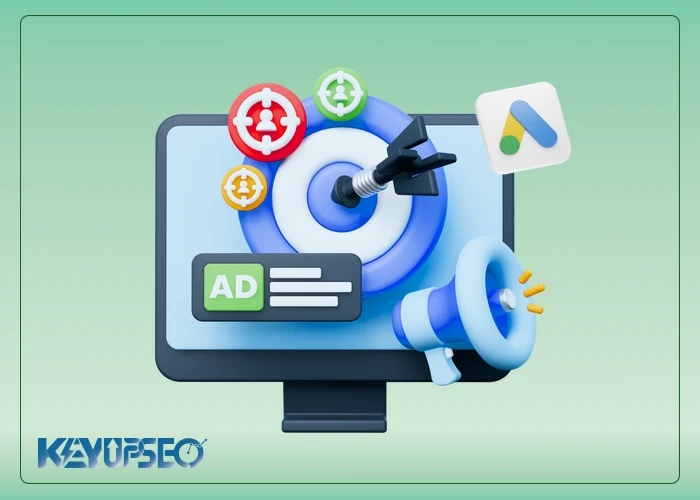
The Google Search Network: Capturing Demand
When people search online, brands want to appear at the top of the results to capture that immediate intent. The Search Network places your text-based ads directly within Google's search results, Google Maps, and partner sites, targeting users based on the keywords they actively query.
How It Works (Example):
Imagine you run a web design company with two services: e-commerce stores and corporate websites. You can create two separate campaigns in Google Ads, each with its own set of relevant keywords (e.g., “build online store,” “professional website design”).
When a potential client searches for one of these terms, your ad can appear at the top of the results page, marked as “Ad.” This prime placement puts you directly in front of a user with a clear, commercial need.
Important: Ad ranking is not a simple auction based on who pays the most per click (bid). Google uses a combination of your bid and your Quality Score, a metric based on ad relevance, landing page experience, and expected click-through rate. A relevant, high-quality ad can often win a better position at a lower cost than a generic, high-bidding ad.
Pro Tip: Before launching a Search campaign, ensure your website is optimized to convert the traffic. For a comprehensive guide, read our article How to Get Your Website Ready for Google Ads on the KeyUpSeo blog.
The Google Display Network: Building Awareness
Have you ever wanted to showcase your business with a visual banner or video ad on popular websites? The Google Display Network (GDN) makes this possible. It consists of millions of websites, blogs, and mobile apps, reaching over 90% of internet users globally.
This network allows for visual and interactive advertising (banners, videos, rich media). You can target audiences based on their interests, demographics, or specific websites they visit, making it ideal for building brand awareness, retargeting past visitors, and reaching potential customers as they browse relevant content online.
-
Google AdSense: The Publisher’s Engine
While Google Ads is for advertisers, Google AdSense is its counterpart for website owners and publishers. It solves a fundamental marketplace problem: advertisers need places to show their ads, and publishers have website space but lack direct ad sales teams.
How it Works:
Google AdSense automatically matches relevant, targeted ads from the Google Ads network to a publisher's website content. The publisher earns revenue when visitors view or click on those ads. This creates a seamless win-win ecosystem: advertisers reach their audience across millions of sites, and publishers monetize their traffic without managing direct ad sales.
Why Google Dominates: Key Advantages
Google's advertising supremacy isn't accidental. It's built on several core strengths:
- Intent-Driven Demand (Search): Google Ads, especially the Search Network, is the pinnacle of pull marketing. You're not chasing customers; you're placing your message in front of users actively searching for solutions related to your keywords. This captures high-intent demand.
- Sophisticated & Granular Targeting: The platform offers exceptionally precise targeting options from demographics and interests to life events, detailed job titles, and even the time of day or device. You can define your audience with remarkable specificity.
- Cost Efficiency Through Machine Learning: Google's systems continuously optimize campaigns. By analyzing performance data at scale, it can often improve results and manage costs more effectively than manual management, striving for the best possible return on your ad spend.
- Unmatched Reach & Integration: With access to the Search Network, the vast Display Network, YouTube, Gmail, and more, Google provides a unified platform to reach over 90% of global internet users across the entire marketing funnel.
If you are active in the YouTube field, I recommend you buy YouTube SEO views.
In essence, Google's intelligent system leverages its unparalleled data and reach to provide advertisers with a powerful, granular, and results-driven platform. Its depth of options allows for continuous optimization at any scale.
Other Major Advertising Networks
While Google dominates the landscape, a complete advertising strategy often leverages multiple platforms to reach audiences across different contexts and mindsets. Here’s a brief overview of other essential advertising networks.
Social Media Advertising Networks
These platforms excel at reaching users based on their interests, connections, and engagement within a social ecosystem.
- Meta Ads (Facebook & Instagram): Offers unparalleled demographic and interest-based targeting, combining Facebook's broad reach with Instagram's visual appeal. Ideal for brand building, community engagement, and direct response campaigns.
- LinkedIn Ads: The premier network for B2B marketing and professional targeting. Ads can be targeted by job title, company, industry, skills, and seniority, making it perfect for lead generation, recruitment, and corporate branding.
- TikTok Ads: Captures a young, highly engaged audience through immersive, short-form video content. Its algorithm is exceptional at viral discovery, making it powerful for trend-driven brand awareness and reaching Generation Z.
- X (formerly Twitter) Ads: Effective for real-time engagement, conversation targeting, and promoting timely content, news, or events based on user discussions and trending topics.
Native & Video Advertising Specialists
- Taboola & Outbrain: These are leading content discovery platforms. They promote your content (as “recommended” or “sponsored” widgets) on major publisher websites like CNN, BBC, and The Guardian. Ideal for driving traffic to blog articles or news-based content.
- Amazon Advertising: A critical network for e-commerce and sellers on Amazon. It allows you to promote products directly within Amazon's search results and product pages, capturing users with high commercial intent at the point of purchase.
Building Your Targeted Advertising Strategy
We began by recognizing that a billboard in the wrong location is merely noise. Effective advertising isn't about the loudest voice, but the most relevant message delivered to a receptive audience.
Throughout this guide, we’ve deconstructed the components of modern advertising:
- The Core Concept: Advertising is a strategic call to action, designed to inform and persuade.
- The Dual Power: It can solve active needs and shape latent desires.
- The Digital Shift: Online platforms offer precision, immeasurability, and scalability that offline channels cannot match.
- The Toolkit: You now understand the key formats (from social ads to native content), payment models (from CPC to CPA), and targeting methods (from demographics to remarketing) at your disposal.
- The Networks: You’ve seen how giants like Google operate and learned about other essential platforms like Meta and LinkedIn that cater to specific audience intents.
The path forward is clear. To create targeted, effective, and results-driven campaigns, you must:
- Define Your Audience with Precision: Use the targeting principles outlined.
- Choose the Right Mix: Select formats and networks that align with where your audience spends their time and attention.
- Measure Relentlessly: Use the data provided by these platforms to track, analyze, and optimize for your key metric, whether it's clicks, conversions, or ROAS.
- Test and Iterate: Start with a hypothesis, launch campaigns, learn from the data, and continuously refine.
Advertising today is a blend of art and data science. By leveraging the insights and frameworks in this guide, you can move beyond guesswork. You can build a systematic approach that ensures your marketing investment attracts, engages, and converts the right customers, driving sustainable growth for your business.
Release date : 7 February, 2026